Hungary Takes Steps to Reform Media
Hungary's primary public television channel has suspended its news broadcasts, while a state-operated radio station has ceased operations altogether. This move aims to create media that is independent and trustworthy, following the departure of former Prime Minister Viktor Orbán, who was known for exerting tight control over state media during his 16-year tenure.
Promises of Media Reform
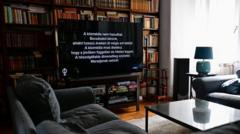
Péter Magyar, Hungary's new Prime Minister, made media reform a central promise of his campaign. He described the suspension of broadcasts as "the end of propaganda broadcasts," marking a significant shift in the country's media landscape. On Tuesday afternoon, both the TV channel M1 and Kossuth radio station halted their transmissions, with M1 displaying a message that read: "Public media should not lie. We are sorry for doing it for so long." The station pledged to reform its content to be more independent and reliable.
Kossuth radio, which typically covers news, current events, sports, and culture, was replaced by the classical music station Bartok Radio. According to the AFP news agency, the websites for both M1 and Kossuth were also inactive during this time.
Transition to New Formats
A statement from MTVA, the organization behind M1, indicated that the channel would temporarily resume broadcasting in a new format without news programmes. News bulletins are expected to be gradually reintroduced with a newly formed editorial team. Magyar has hailed this development as a "historic day" that signifies the conclusion of propagandistic content on public media platforms. He remarked, "They lied at night, they lied during the day, they lied on every wavelength. That is now over."
Reactions and Political Implications
In response, Viktor Orbán criticized the move, labeling it as "another example of Tisza [Hungary's ruling party] tyranny" in a Facebook post. He urged his followers to tune into Hir TV, a channel associated with his political party Fidesz.
Magyar, who achieved a landslide victory earlier this year after leaving Orbán's party in 2024, promised a "regime change." He claimed that much of the Hungarian media had been taken over by Orbán's allies, who frequently misrepresented him and his party. Magyar had not been featured on state TV since September 2024, but after his electoral win, he appeared on both Kossuth radio and M1 to announce plans to halt their news coverage and establish a new broadcast authority to ensure press freedom.
Since Magyar's rise to power, TV2, a commercial broadcaster linked to Fidesz, has also experienced changes, with the departure of its main news anchors and news director.
Source: Original Article