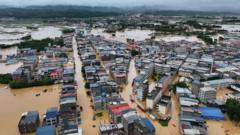
Typhoon Maysak Brings Destruction to Southern China
Over the weekend, Typhoon Maysak unleashed heavy rainfall on Renhe village, located in Guangxi province, southern China. The intense downpour, which began on Sunday, quickly escalated into severe flooding, reaching knee-deep levels by early Monday and submerging the first floors of homes by dawn. Residents, caught unprepared by the rapid rise of water, were forced to evacuate without essential supplies.
Zhou, a resident of Renhe, described the swift onset of the floods. "The water just came so fast," she explained, highlighting how her family, along with tens of thousands of others in Guangxi, had to flee as rivers swelled and dam walls gave way under the pressure. Tragically, at least four people lost their lives due to the flooding.
Widespread Impact and Emergency Response
The city of Nanning and surrounding villages have been particularly hard-hit, with many residents resorting to seeking refuge on rooftops. The typhoon also triggered severe thunderstorms and rare tornadoes in Hubei province, located hundreds of kilometers away. According to state media, these extreme weather events have resulted in at least 17 fatalities, numerous injuries, and the evacuation of tens of thousands of people.
In response to the widespread devastation, President Xi Jinping has ordered comprehensive rescue and relief operations. The authorities in Nanning warned that persistent "extremely heavy rain" might hinder these efforts, as another storm, Super Typhoon Bavi, is approaching China's eastern coast.
Challenges Faced by Residents and Rescuers
The extreme weather has posed significant challenges for both residents and rescue workers. Many residents remain trapped, particularly in remote mountainous areas, and are struggling with limited access to food and other necessities. Zhou, currently in another province, expressed concern for her family members who are still trapped in Renhe. Her four-month-old niece has been without milk for more than a day, as supplies dwindle.
Another resident, Huang from Yunbiao, recounted the rapid flooding that submerged villages in mere minutes. She noted the scarcity of rescue personnel and the inadequacy of the available lifeboats, making it difficult to reach those in need. Many residents are also dealing with communication challenges due to disrupted power and internet services.
Rising Concerns Over Wildlife
In addition to the flooding, there are increasing concerns about wildlife, particularly snakes, being displaced by the waters. Reports indicate that snakes from farms, which are raised for traditional medicine and other purposes, have escaped into urban areas, posing additional dangers to residents.
Rare Tornadoes Add to the Chaos
Meanwhile, in Hubei province, meteorologists reported the formation of at least two tornadoes, a rare occurrence in the region. These tornadoes, caused by the collision of cold northern air with the warm air brought by Typhoon Maysak, have caused significant damage. Videos circulating on social media show the destruction in cities like Ezhou and Huanggang, where strong winds damaged buildings and injured residents.
In one incident, a man in Huanggang was seriously injured after being swept out of his high-rise apartment by the tornado. The student from the area described the alarming scene, noting how "things started flying through the air" outside his dormitory window.
Ongoing Extreme Weather Across China
Elsewhere in China, extreme weather continues to take a toll. In Inner Mongolia, flash floods resulted in the deaths of two cattle farmers, while record rainfall in Fushun city led to three more fatalities. These events underscore the growing threat of extreme weather, which experts increasingly attribute to climate change.
As rescue operations continue, many people remain anxious for news of their loved ones. Zhou, from Renhe, recounted how a friend swam through floodwaters to check on her family. Though her father confirmed they were safe, surrounded by water, the fate of their neighbors remains uncertain.
Source: Original Article