Fuel Shortages Challenge Russia
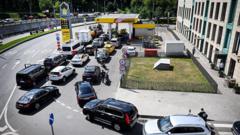
Russia is currently experiencing a severe fuel shortage, leading to extensive queues at petrol stations across Moscow. The situation is evident as one drives through the capital, witnessing both cars and lorries waiting in line, with some stations completely out of fuel and closed.
Moscow, as the capital city, typically benefits from Russia's vast resources. However, even here, authorities struggle to maintain a steady supply of petrol and diesel. The atmosphere among those waiting is one of frustration rather than anger. One resident, Yekaterina, expressed her dissatisfaction, noting the panic due to fears of an oil shortage, although she remained hopeful that a reorganization of oil distribution could alleviate the problem.
Public Reaction and Blame
The public sentiment varies, with individuals like Elmar noting the rise in fuel prices and the inconvenience of lengthy wait times. He mentioned planning a trip to Dagestan but expressed uncertainty due to the fuel issues. The reluctance to openly assign blame is apparent, as criticism of the government or President Vladimir Putin remains sensitive in Russia.
Valery, another resident, highlighted the irony of long queues in a country renowned for its oil production, attributing the crisis partly to a lack of preparedness and the impact of Ukrainian missile strikes. Despite the inconvenience, he hoped for a resolution soon.
Impact of the Ukraine Conflict
The war in Ukraine is increasingly affecting life within Russia. President Putin has tried to shield the population from the war's impacts, referring to it as a "special military operation." However, the conflict's consequences are becoming more visible, with Ukrainian drone and missile strikes targeting oil refineries in Russian territory, including areas near Moscow and St Petersburg.
These attacks, combined with internet restrictions and fuel shortages, are creating challenges for Russia, one of the world's largest oil producers, which is now struggling to meet domestic fuel demands.
Geopolitical Tensions and Economic Concerns
Andrei, a Russian citizen queuing with his wife, attributed the crisis to "geopolitics," acknowledging that the situation could deteriorate further. He expressed a hope for dialogue towards peace, though he felt that European partners might not be contributing to such efforts.
Social media platforms are filled with images of long lines at petrol stations, with reports of altercations and rationing measures. In some areas, authorities have deployed Cossacks to maintain order, while local governments have reduced services like bus routes and waste collection.
This economic strain raises questions in NATO circles about whether it might lead to political pressure on the Kremlin. Ukrainian strategists hope that domestic dissatisfaction could prompt calls for an end to the war.
Kremlin's Response and Public Opinion
President Putin has publicly acknowledged the fuel shortages, attributing them to Ukrainian attacks but asserting that the situation is manageable. In response, the government is increasing fuel imports, subsidizing prices, and permitting the sale of lower-quality fuel to mitigate the crisis.
Recent polls indicate a dip in Putin's approval ratings, with the Levada Center reporting a decrease to about 74%. Public trust in Putin is also declining, as shown by the Russian Public Opinion Research Centre (VCIOM), which noted a drop to 73% within a single week.
Economic pessimism is growing, with Gallup finding that 60% of Russians believe their local economic conditions are worsening, the highest level of concern in two decades.
Strategic Implications
Despite these challenges, experts like Christopher Weafer from Macro Advisory suggest that the fuel crisis could significantly impact Russia's economic growth. The ongoing conflict and associated costs are dampening prospects for the year ahead.
Nina Khrushcheva, a professor of international affairs, argues that Western expectations of forcing Putin to negotiate are unrealistic. She believes that increased pressure might lead to more aggressive and repressive actions from Putin.
Putin appears resolved to continue his military strategy, recently appearing in military attire and promising further territorial gains. However, he has instructed his generals to consider the involvement of Ukraine’s European allies, indicating potential future decisions.
As diplomatic and military circles speculate on Putin's next moves, the question remains: will the fuel crisis and its broader implications alter Russia's approach to the Ukraine conflict?
Source: Original Article